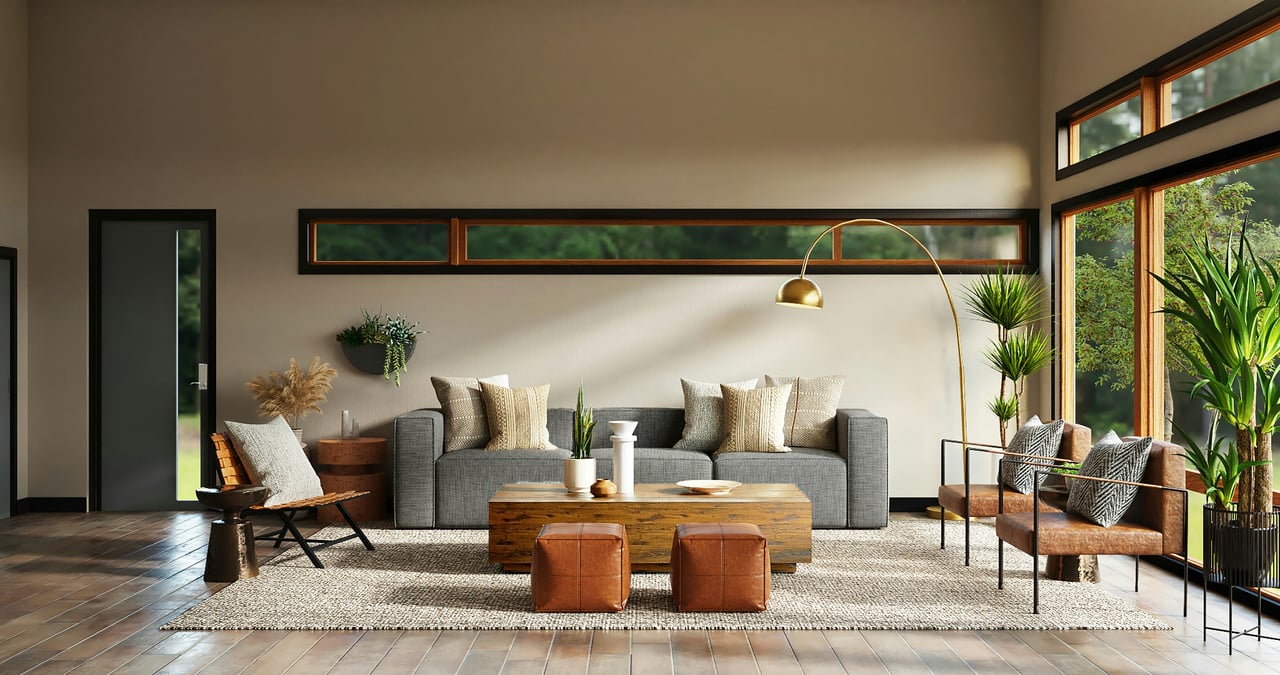
Short answer: Yes, for most LA sellers, staging is worth it, but how much it's worth depends on your neighborhood. In slower luxury corridors like Hancock Park or the Hollywood Hills, staging protects your list price and prevents a stale-listing discount. In faster Eastside markets like Highland Park or Silver Lake, staging is about winning multiple offers, not preventing a loss. The tool is the same across Los Angeles and the broader Southern California market. The reason you're using it changes block by block.
The ROI of home staging isn't a fixed number, it moves with your submarket, your price point, and how many comparable home sales are competing for the same buyers. Below is the current data, broken down so you can see where staging pays for itself and where it's closer to a courtesy than a necessity.
What the 2026 LA Market Data Shows
Los Angeles homes are taking longer to sell than they did a year ago, but they're still closing close to asking price on average. According to Realtor.com's June 2026 Los Angeles market report, the median days on market hit 50, up 6.4% year-over-year, while inventory stayed tight. A separate Realtor.com local snapshot puts the June 2026 sale-to-list ratio at 99%, meaning the typical home sold almost exactly at its asking price.
That 99% citywide figure hides a lot of variation. Here's what Q1 2026 looked like broken out by submarket:
LA Submarket | Median Sold Price (Q1 2026) | Avg. Days to Sell | Sale-to-List Ratio |
|---|---|---|---|
Eastside (Silver Lake, Highland Park, Echo Park) | $1.303M | 37 days | 103.37% |
Westside (Santa Monica, Culver City, Venice) | $2.185M | 35 days | 98.02% |
Central LA (Hancock Park, West Hollywood, Mid-Wilshire) | $1.55M | 44 days | 97.41% |
Hills & Luxury (Beverly Hills, Bel Air, Los Feliz, Hollywood Hills) | $2.735M | 57 days | 92.80% |
The Hills & Luxury numbers stand out. A 92.8% sale-to-list ratio means the average home there is selling almost 7% below asking. On a $3M home, that's a real gap, and it's the reason staging in that corridor functions as a hedge, not a luxury add-on.
The Eastside tells the opposite story. Homes are closing over asking on average, so staging there isn't about preventing a discount. It's about generating first-weekend competition that pushes offers past list price. Different goal, same tool.
Community-aggregated data from a June 2026 LA market report adds one more layer: homes that sold in under 14 days averaged roughly 2% above list price, while slower-moving listings tended to close at or below list. Staging doesn't guarantee a fast sale on its own, but it's one of the levers that gets a home into that faster-selling group, and it directly affects foot traffic at your first open house, which is usually the single biggest driver of early offers.
There's also a mechanical reason to get staging right the first time. Most local MLS rules reset or flag the days-on-market clock when a listing is withdrawn and relisted, so buyers and agents can often see that a home has been sitting even if the listing looks fresh. A strong, staged debut avoids that problem entirely rather than trying to fix it later with a relist.
Hancock Park, Los Feliz, and Windsor Square: What the Numbers Say
Here's how staging economics break down in the neighborhoods I work in every week, based on a Spring 2026 overview from the Angela Bond Group's 2026 selling guide.
Windsor Square: Median price $3.5M, 33 days on market, 102.8% sale-to-list ratio. Homes here are closing above asking. Staging helps you compete for that outcome instead of settling for list price.
Hancock Park: Median price $3.4M, 56 days on market, 95.4% sale-to-list ratio. Recent Zillow data puts the current Hancock Park median sale price at $4.2M, with 31 days on market and only 17 homes sold in the last 90 days. That's a low-volume, high-price market where presentation carries real weight.
Los Feliz: Median price $1.9M, 50 days on market, roughly 98% sale-to-list. A well-staged home here can realistically shave weeks off that 50-day average.
The character homes I specialize in, Spanish Revivals, Craftsmans, Tudors, have a story to tell. Staging that honors the architecture and highlights original details tends to land better with buyers than a generic furniture drop. That's a distinctly LA consideration, and it's worth finding a stager who actually understands the architecture.
Two things buyers consistently respond to in these neighborhoods: a floor plan that reads clearly in photos and in person, and a usable outdoor space. LA buyers live outside as much as inside, so a staged patio, courtyard, or backyard with even minimal furniture tends to outperform one left bare, and a home that's furnished thoughtfully room to room makes the floor plan easier for buyers to understand on a first walkthrough.
What Staging Costs in Los Angeles
Every home is different, and cost depends on square footage, how many rooms need furniture, whether it's a full vacant staging or an occupied consultation, and which firm you hire. Here's what local vendors are publishing for 2026, according to Mid Modern Designs' Los Angeles home staging pricing calculator.
Condos, townhomes, and duplexes: A larger unit typically runs $4,500 to $6,500, with a midpoint around $5,500.
Single-family homes: Costs range from $3,000 to $10,000. A 3-bedroom home on a standard 3-month contract usually lands around $8,000. Larger properties or special requirements can push past $10,000.
These are one vendor's published figures, not a market-wide standard, so treat them as a budgeting starting point rather than a fixed quote. Most LA staging contracts run 60 to 90 days, with month-to-month extensions if the home hasn't sold. On the Eastside, you may never need the extension. In a slower luxury corridor, that extension cost becomes part of the math.
Most of that fee is really a furniture rental price, paid to a furniture rental company that delivers, installs, and later removes everything in the home. That's different from an occupied consultation, where a stager works with what you already own instead of bringing in inventory, so it's worth asking any staging company for an itemized quote that separates design fees from furniture rental so you know exactly what you're paying for.
One question I get often: is staging tax deductible? For a personal residence, staging costs generally aren't deductible the way a repair or improvement might be, but they're typically treated as a selling expense that reduces your net proceeds for capital gains purposes, and for investment or rental property sellers, staging can sometimes be deducted as a business expense. This varies by situation, so it's a question for your CPA, not your agent, before you assume anything is or isn't deductible.
Nationally, the National Association of Realtors' (NAR) research on home staging consistently finds that a significant share of buyer's agents say staging improves buyers' perception of a home, and many seller's agents report staged homes sell faster and support stronger offers. Those are national findings I use as directional context, not a guarantee for any individual property in LA.
When Staging Makes the Most Sense
Vacant homes, at any price point. An empty house reads as cold and smaller than it is, and it's harder for buyers to connect with emotionally. This is the clearest case for staging, both in photos and in person.
Luxury and slower-moving segments. If average days on market in your neighborhood is pushing 50 to 60 and sale-to-list ratios sit in the low 90s, staging is a defensive investment. It helps prevent the stale-listing spiral, a price reduction, more days on market, lower offers, that can cost far more than the staging fee itself.
Competitive over-asking markets. On the Eastside, where Q1 2026 data showed a 103.37% sale-to-list ratio and a 37-day average, staging is about maximizing, not protecting. The homes that generated multiple offers in the first weekend almost always showed beautifully, online and in person.
Character homes with architectural details. A Spanish Revival with original tile, arched doorways, and a courtyard doesn't need to be hidden behind generic staging. It needs staging that frames those features.
When you might skip it: In a hot micro-market where well-priced homes move quickly regardless of condition, or if the property is being sold as a teardown or major fixer, the math changes. Full vacant home staging also isn't worth it on every empty property, sometimes a deep clean and virtual staging are enough. Every situation is different, and it's worth talking through with your real estate agent before you finalize a listing strategy.
DIY Staging, Virtual Staging, and Other Budget Options
Full staging isn't the only path, and it's not always the right one. If the budget for a full vacant staging doesn't make sense for your home, here's what else is worth considering as part of your broader marketing strategy.
DIY staging. For an occupied home in good condition, DIY staging, decluttering, depersonalizing, rearranging what you already own, can get you most of the way there for the cost of a weekend. It works best paired with a short consultation from a professional stager who can point out the one or two rooms that need real help.
Furniture editing. Rather than a full furniture rental, some stagers offer furniture editing: removing pieces that make rooms feel small or dated, and rearranging or supplementing with a few key items like soft furnishings, throw pillows, a rug, updated lighting, rather than a full room-by-room install. This tends to be the right call for updated homes that just need a refresh.
Virtual staging. For vacant spaces, virtual staging (digitally furnishing photos of empty rooms) is a low-cost way to help listing photos perform online before a buyer ever walks through the door. It doesn't help the in-person showing, so it's best used alongside at least a light physical staging effort, not as a full replacement for it.
Deep clean. Whatever staging route you choose, a professional deep clean should happen first. It's the least expensive, highest-return step in preparing any listing, and no amount of furniture or soft furnishings will offset a home that doesn't feel spotless.
Frequently Asked Questions
Is professional staging really worth it in LA, or can I just declutter and do minor updates? Decluttering is a baseline, not a substitute. In a market where homes sit 50-plus days on average and buyers have options, presentation is a differentiator. Professional staging goes beyond tidying, it's about furniture scale, flow, and the emotional connection that drives offers. For a vacant home, no amount of cleaning replaces actual furniture. For a well-maintained occupied home in a hot micro-market, a staging consultation using your existing pieces may be enough.
Do staged homes in Los Angeles actually sell faster or for more money? The data points that way. Community-aggregated June 2026 LA market data shows homes that sold in under 14 days averaged roughly 2% above list price, while slower sellers tended to close at or below list. Nationally, NAR's staging research consistently finds that staged homes reduce time on market and support stronger offers. Staging is one of several factors behind that speed, alongside pricing and marketing.
Which LA neighborhoods see the biggest benefit from staging? The clearest ROI case is the Hills & Luxury corridor, Beverly Hills, Bel Air, Hollywood Hills, and Los Feliz, where Q1 2026 data showed 57 average days on market and a 92.8% sale-to-list ratio. Staging there helps prevent price reductions and prolonged marketing time. Eastside neighborhoods (Silver Lake, Highland Park, Echo Park) closed over asking at 103.37% sale-to-list in Q1 2026, so staging there is about maximizing competitive offers. Central LA neighborhoods like Hancock Park, with longer days on market and sale-to-list ratios in the mid-90s, fall in between.
For higher-end listings in Hancock Park or Windsor Square, is staging expected? Yes. Buyers at the $3M-plus price point expect a fully presented home. Windsor Square's Spring 2026 data showed a 102.8% sale-to-list ratio and only 33 days on market, reflecting strong demand and high presentation expectations. Hancock Park, with a current median sale price around $4.2M and a smaller pool of active buyers, is a market where a home that doesn't show well simply sits. At these price points, staging is a standard part of listing preparation, not an optional extra.
If I'm selling in a slower part of LA with longer days on market, should I stage or price more aggressively instead? Both matter, and they solve different problems. Pricing aggressively gets buyers in the door. Staging converts that interest into offers and protects you from lowball negotiations once buyers are inside. A home that's priced right but shows poorly will still sit. A home that's beautifully staged but overpriced will sit even longer. The strongest strategy combines correct pricing from day one with presentation that gives buyers nothing to negotiate against. Your specific answer depends on your home's condition, competition, and timeline, that's the conversation to have with your agent before you list.
The Bottom Line
Staging is a strategic tool, not a universal requirement. Whether it makes sense for your home depends on your neighborhood, your price point, and what you're trying to achieve, a faster sale, a stronger price, or both.
If you're thinking of selling, give me a call and we'll start with a real look at what your home is worth and how to present it to buyers.