Discover Mid-City
Mid-City is one of Los Angeles' most diverse and centrally located neighborhoods, prized for its "middle of everything" position between Downtown LA, the Westside, Hollywood, and Culver City. It's a patchwork of distinct pocket neighborhoods, from historic Spanish Colonial enclaves to fast-changing corridors near light rail, each with its own character.
Mid-City is generally bounded by Pico Boulevard to the north, Crenshaw Boulevard to the east, the Santa Monica Freeway (I-10) to the south, and Robertson Boulevard to the west, with a northwest edge along Cadillac Avenue and La Cienega Boulevard. It sits primarily within ZIP codes 90016 and 90019, with adjoining sections in 90034 and 90035. It's flanked by Carthay and Mid-Wilshire to the north, Arlington Heights to the east, Culver City and West Adams to the south, Palms to the southwest, Beverlywood to the west, and Pico-Robertson to the northwest.
Quick Snapshot
- ZIP Codes: 90016, 90019, 90034, 90035
- Vibe: Diverse, eclectic, historically layered, in transition
- Nearby: Lafayette Square, Victoria Park, Picfair Village, Little Ethiopia, Arlington Heights, Carthay, West Adams, Culver City
- Boundaries: Pico Boulevard to the north, Crenshaw Boulevard to the east, the Santa Monica Freeway to the south, Robertson Boulevard to the west
- Landmarks: Nate Holden Performing Arts Center, the Del Mar Theater, the Ray Charles Post Office (Ray Charles Station), Roscoe's House of Chicken and Waffles, Little Ethiopia's Fairfax Avenue corridor
👉🏻 VIEW CURRENT LISTINGS IN MID-CITY 👈🏻
Homes & Architectural Styles
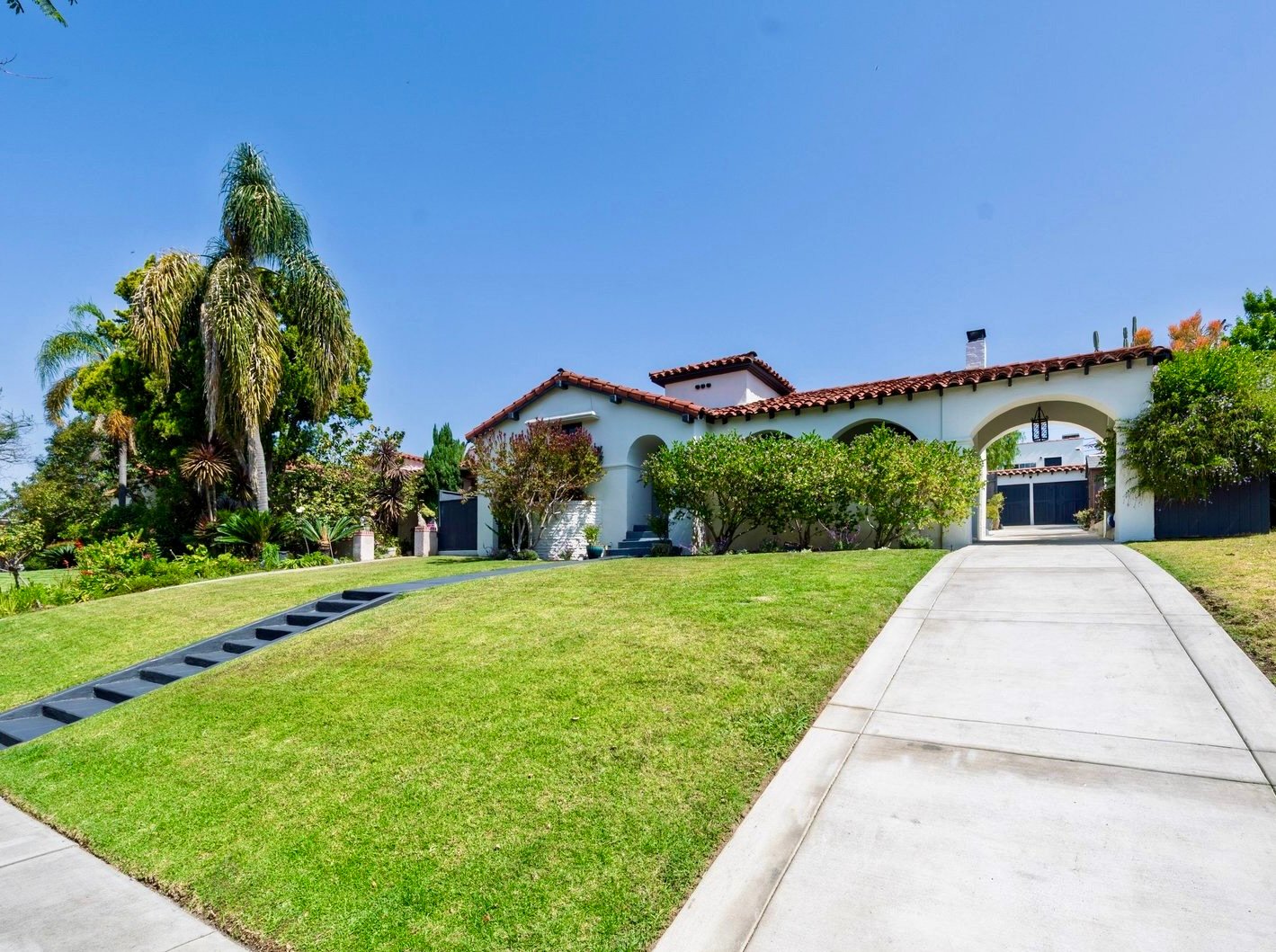
Mid-City's housing stock reflects decades of layered development, with a median home year built of 1930 and a mix of bungalows, Spanish-style homes, and increasingly, multifamily infill. Several of its constituent pocket neighborhoods carry their own architectural distinction and, in some cases, formal historic protections.
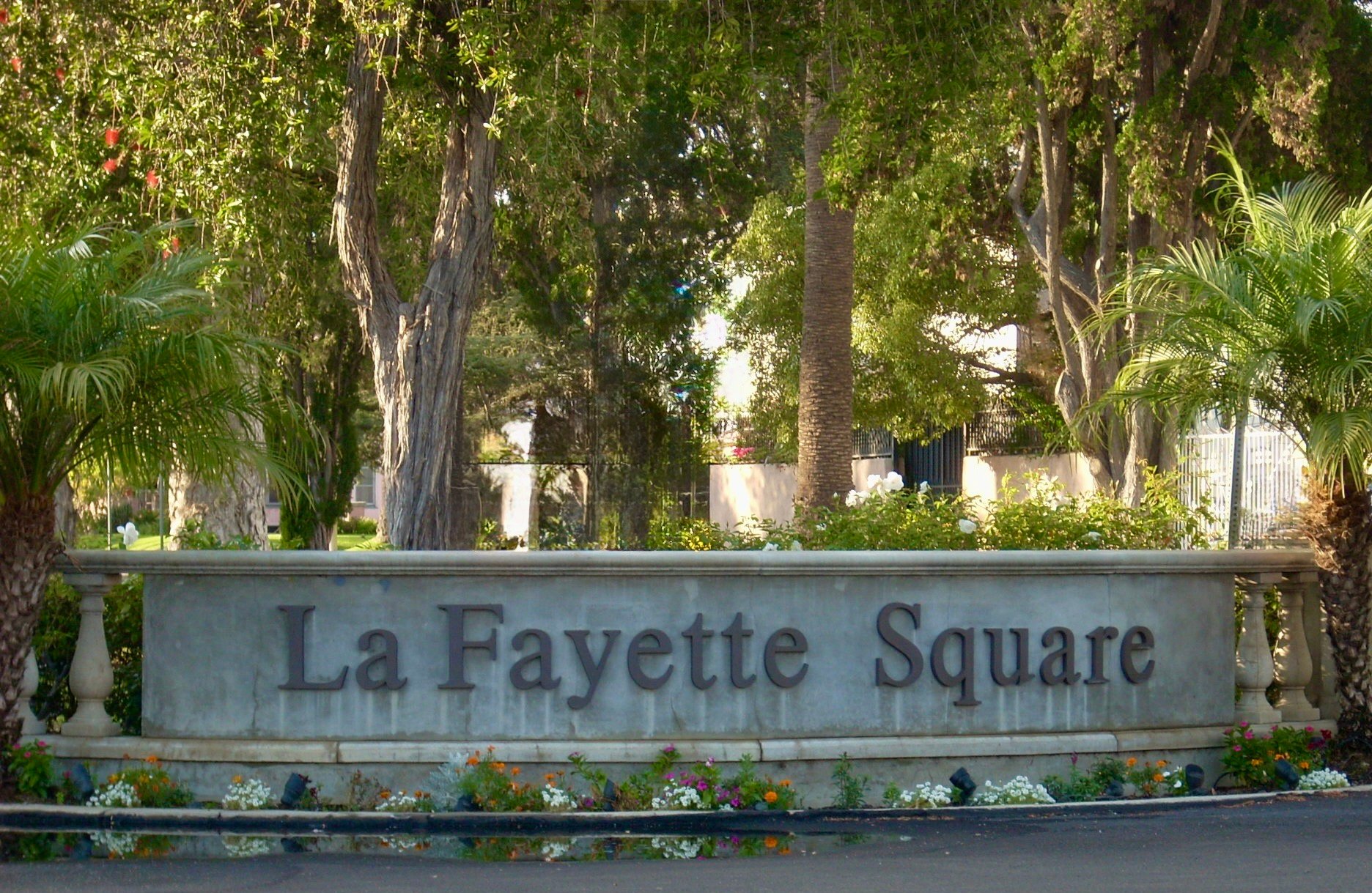
Lafayette Square, on Mid-City's eastern edge, was developed starting in 1913 by banker George L. Crenshaw and was designated a Historic Preservation Overlay Zone (HPOZ) in 2000. Its large homes, many in the 5,000–6,000 square foot range on lots up to 24,000 square feet, showcase Tudor Revival, Italianate, Mediterranean Revival, Spanish Colonial Revival, and American Colonial Revival styles from the 1910s and 1920s, along with a notable number of mid-century modern homes, including the Paul R. Williams Residence, which the architect designed for his own family.
Picfair Village, whose name derives from Pico and Fairfax, was developed in the 1920s as Pico Boulevard Heights and was notable for being open to Jewish and Black residents at a time when many LA neighborhoods used racially restrictive covenants. Its housing stock is predominantly Spanish Colonial Revival and Art Deco one- and two-family homes from the 1920s–1930s, with mid-century multi-unit buildings concentrated north of Saturn Street.
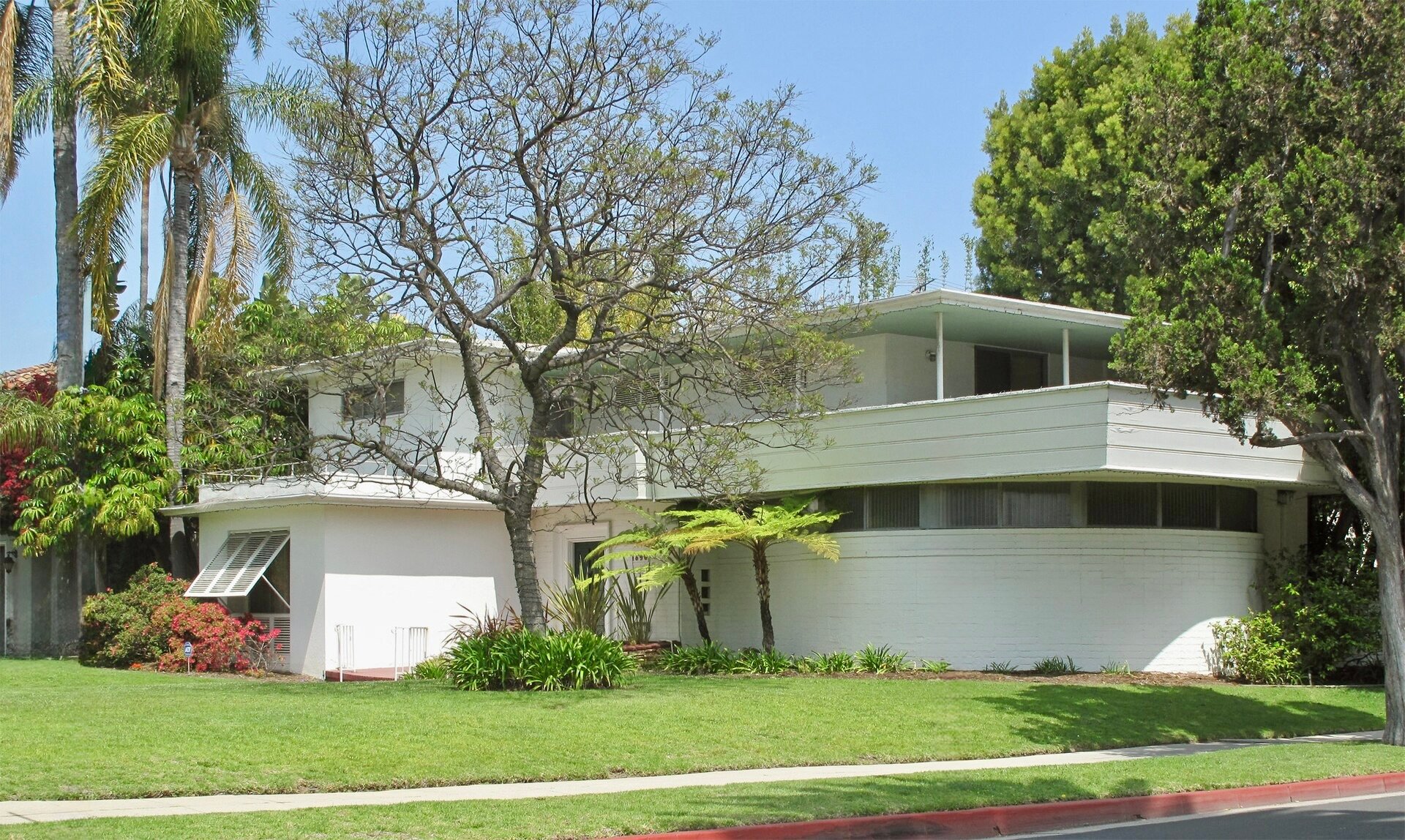
Popular architectural styles across Mid-City include:
- Spanish Colonial Revival & Mediterranean Revival
- Tudor Revival & Italianate
- American Colonial Revival & Craftsman
- Art Deco
- Mid-century modern (particularly in Lafayette Square and Picfair Village)
A typical feature set includes:
- Period details like Batchelder fireplaces and Juliet balconies (Lafayette Square)
- Barrel-vaulted ceilings, archways, and tiled fireplaces in Spanish-style bungalows
- A mix of single-family homes, townhouses, and growing multifamily/ADU development near transit corridors
- Lot sizes ranging widely — modest lots in Picfair Village up to 12,000–24,000+ sq ft estate lots in Lafayette Square
Photo: "Lafayettesquare" by Jengod is licensed and edited under CC BY-SA 4.0.
Lifestyle & Walkability
Walkability varies notably by sub-area: the broader Mid-City neighborhood carries a Walk Score of roughly 78, while the Mid-City West pocket near Fairfax and Beverly ranks among the city's most walkable areas at a Walk Score of 90. Other sources report a more modest 68–70 for the wider Mid-City area depending on methodology, with a bike score around 60–72 and transit score of 57–70. Public transit is provided by Metro and LADOT bus lines, with the nearest freeway access via I-10, and Metro's approved K Line Northern Extension will eventually run underground through Mid-City on its way from Crenshaw to Hollywood.
- Shopping & Dining: Roscoe's House of Chicken and Waffles on La Brea Avenue, the historic Del Mar Theater and Mint music club on Pico Boulevard, and coffee and taco spots throughout the neighborhood
- Cultural District: Little Ethiopia, a single-block stretch of Fairfax Avenue between Olympic Boulevard and Whitworth Drive, officially recognized by the LA City Council in 2002 as the first neighborhood in the world named for an African nation
- Performing Arts: The Nate Holden Performing Arts Center on Washington Boulevard, home to the Ebony Repertory Theatre
- Music History: The Ray Charles Station post office honors the singer, who built and operated his RPM International recording studio in the area starting in the mid-1960s
- Getting Around: Roughly 10 miles to Downtown LA and Santa Monica via I-10, about 5 miles to Beverly Hills and Hollywood, with La Cienega Boulevard a popular route toward LAX
Top Schools & Commute
Zoned Public Schools:
- Alexander Hamilton Senior High School
- Los Angeles High School
- Los Angeles Center for Enriched Studies (magnet, grades 6–12)
- Alta Loma Elementary School
- Cienega Elementary School
- Marvin Avenue Elementary School
Nearby Charter & Notable Options:
- New Los Angeles Charter Elementary School
- New Los Angeles Charter Middle School
- Girls Academic Leadership Academy, Dr. Michelle King School for Sci, Tech, Eng and Math
Typical Commute Distances:
- Downtown LA and Santa Monica: roughly 10 miles via I-10
- Beverly Hills and Hollywood: roughly 5 miles
- Culver City: directly adjacent to the south
- LAX: accessible via La Cienega Boulevard
History & Culture
Mid-City was a key hub of Los Angeles' early 20th-century electric railway network. The Rimpau Loop served as a terminus for the Los Angeles Railway's "Yellow Cars," while Vineyard Junction was a major convergence point for Pacific Electric "Red Car" lines running toward Venice, Santa Monica, and West Hollywood.
A Legacy of Diverse Development
Unlike some of LA's more exclusive early developments, parts of Mid-City were marketed to and settled by Jewish and Black residents in the 1920s at a time when racially restrictive covenants barred them from many other neighborhoods. This history helped shape Mid-City's reputation today as one of the city's most ethnically diverse areas, with a 2000 census diversity index of 0.637 and a population historically about 45% Latino and 38% Black.
Historic Enclaves
- Lafayette Square: Founded in 1913 by George L. Crenshaw as "A Unique Residential Park," designated an HPOZ in 2000, and home to past residents including George Pepperdine, architect Paul R. Williams, and Norton Simon.
- Victoria Park: A gated historic pocket bordered by Pico Boulevard, Crenshaw Boulevard, Venice Boulevard, and West Boulevard, known for well-preserved early 20th-century architecture including the Holmes-Shannon House.
- Little Ethiopia: Emerged as an Ethiopian business and cultural enclave along Fairfax Avenue starting in the late 1980s, officially designated by the LA City Council in 2002.
Musical & Cultural Heritage
Where Hancock Park's identity centers on a trio of celebrated architects, Mid-City's distinctiveness comes instead from layered cultural history and multiple community-built landmarks rather than one design signature. Ray Charles headquartered his RPM International recording studio in the neighborhood starting in the mid-1960s, and the local U.S. Post Office branch was renamed the Ray Charles Station in his honor in 2005.
Little Ethiopia's designation in 2002 made it the first neighborhood in the world officially named for an African nation, reflecting decades of Ethiopian immigrant entrepreneurship concentrated on a single block of Fairfax Avenue. The Nate Holden Performing Arts Center, meanwhile, has anchored Black performing arts in the neighborhood through its resident Ebony Repertory Theatre company.
Diverse Commercial Corridors
Unlike Hancock Park's single unifying shopping street in Larchmont Village, Mid-City's commercial life is spread across several distinct corridors rather than one walkable spine. Fairfax Avenue's Little Ethiopia block anchors the neighborhood's most concentrated dining district, La Brea Avenue is home to the landmark Roscoe's House of Chicken and Waffles, and Pico Boulevard carries both the historic Del Mar Theater and the Mint live music club. This more dispersed commercial pattern reflects Mid-City's identity as a collection of pocket neighborhoods rather than a single planned community.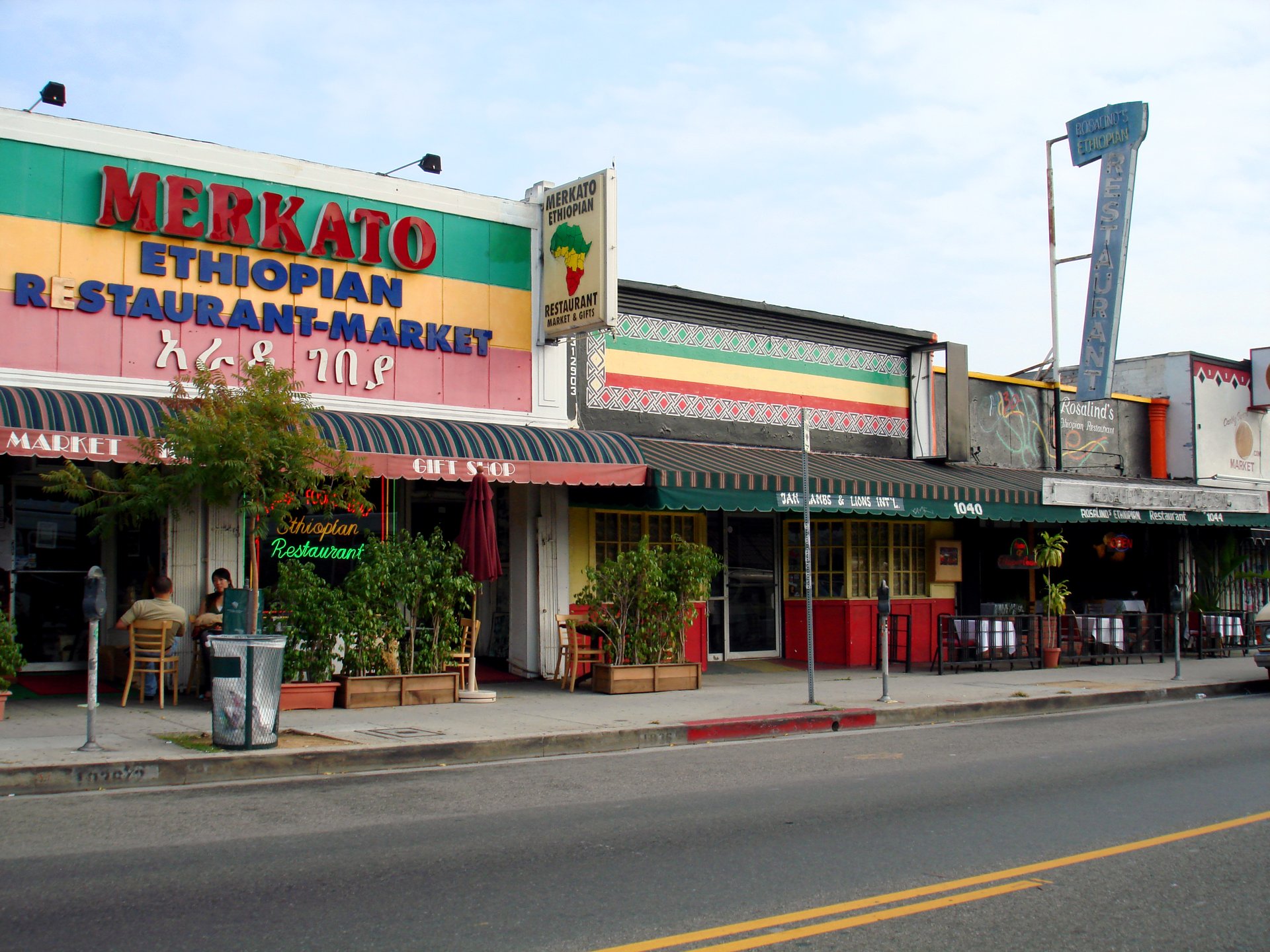
Neighborhoods Within Mid-City
Mid-City is really an umbrella term for a cluster of smaller, distinct pocket neighborhoods, including Arlington Heights, Brookside, Crestview, Lafayette Square, Little Ethiopia, Mid-City Heights, Picfair Village, Faircrest Heights, La Cienega Heights, Reynier Village, Victoria Park, and Wellington Square.
Lafayette Square
Mid-City's grandest historic enclave, Lafayette Square is an HPOZ-protected neighborhood of large early 20th-century homes on wide, tree-lined streets, developed by banker George Crenshaw starting in 1913.
Picfair Village
Named for its position between Pico and Fairfax, this pocket neighborhood developed in the 1920s as an accessible, integrated community and today is known for its Spanish Colonial and Art Deco housing stock.
Victoria Park
A quiet, gated historic district in the West Adams/Mid-City area, Victoria Park preserves fine examples of early 20th-century residential architecture, including a designated Los Angeles Historic-Cultural Monument.
Little Ethiopia
A single-block cultural and dining district along Fairfax Avenue, Little Ethiopia grew from a handful of restaurants in the late 1980s into an officially recognized ethnic enclave by 2002.
Mid-City FAQs
What ZIP codes does Mid-City cover?
Mid-City is primarily associated with ZIP codes 90016 and 90019, with parts of 90034 and 90035 also included depending on the data source.
Are any parts of Mid-City historically protected?
Yes. Lafayette Square has been a designated Historic Preservation Overlay Zone since 2000, which regulates exterior renovations to preserve its early 20th-century architectural character. Other pocket neighborhoods like Victoria Park retain historic character informally or through individual Historic-Cultural Monument designations rather than a full HPOZ.
What architectural styles are common in Mid-City?
Styles vary by pocket neighborhood but commonly include Spanish Colonial Revival, Tudor Revival, Italianate, American Colonial Revival, Craftsman, Art Deco, and mid-century modern homes, with Lafayette Square and Picfair Village offering some of the most distinctive concentrations.
What is there to do in Mid-City?
Residents have access to Little Ethiopia's restaurant corridor, the historic Del Mar Theater and Mint music club, the Nate Holden Performing Arts Center, and several neighborhood parks including Gladys Jean Wesson Park and Mascot Park.
What about transportation and commuting?
Mid-City is served by Metro and LADOT bus lines and sits near the I-10 freeway, roughly 10 miles from Downtown LA and Santa Monica and about 5 miles from Beverly Hills and Hollywood; Metro's approved K Line Northern Extension will eventually bring underground rail service through the neighborhood.
Which schools serve the area?
Public options include Alexander Hamilton Senior High School, Los Angeles High School, the magnet Los Angeles Center for Enriched Studies, and elementary schools such as Alta Loma, Cienega, and Marvin Avenue; families should verify current enrollment boundaries with LAUSD.
What is the current real estate market like?
Recent data shows a median sale price in the $1.2M–$1.5M range depending on the exact data source and boundary used, homes selling after roughly 42–56 days on market on average, and a median home year built of 1930. Buyers should consult current MLS listings and comparable sales for up-to-date pricing given how much this varies by specific pocket neighborhood.
Mid-City vs. West Adams Comparison
How does Mid-City compare to West Adams?
Both neighborhoods sit in central LA and are frequently cross-shopped by buyers seeking character homes at prices below the Westside, but they differ in scale, price point, and historic protections.
Feature | Mid-City | West Adams |
|---|---|---|
Median Sale/List Price (2026) | ~$1.2M–$1.5M, varies by pocket and source | ~$1.0M–$1.27M, varies by pocket and source |
Historic Preservation | One HPOZ (Lafayette Square, also shared with West Adams boundary areas) | Multiple HPOZs — Harvard Heights, Jefferson Park, Adams-Normandie, West Adams Terrace, and others |
Architectural Character | Spanish Colonial Revival, Art Deco, Tudor, mid-century modern | Queen Anne Victorian, Craftsman, Mission and Spanish Colonial Revival, Beaux-Arts |
Walk Score | ~78 neighborhood-wide; up to 90 in Mid-City West pocket | ~76 neighborhood-wide |
Days on Market (2026) | ~42–56 days | ~59–80 days |
*****
Thinking about buying or selling in Mid-City?
Call me and let's strategize your next move!
*****
Hero Photo Credit: Leo_Visions on Unsplash